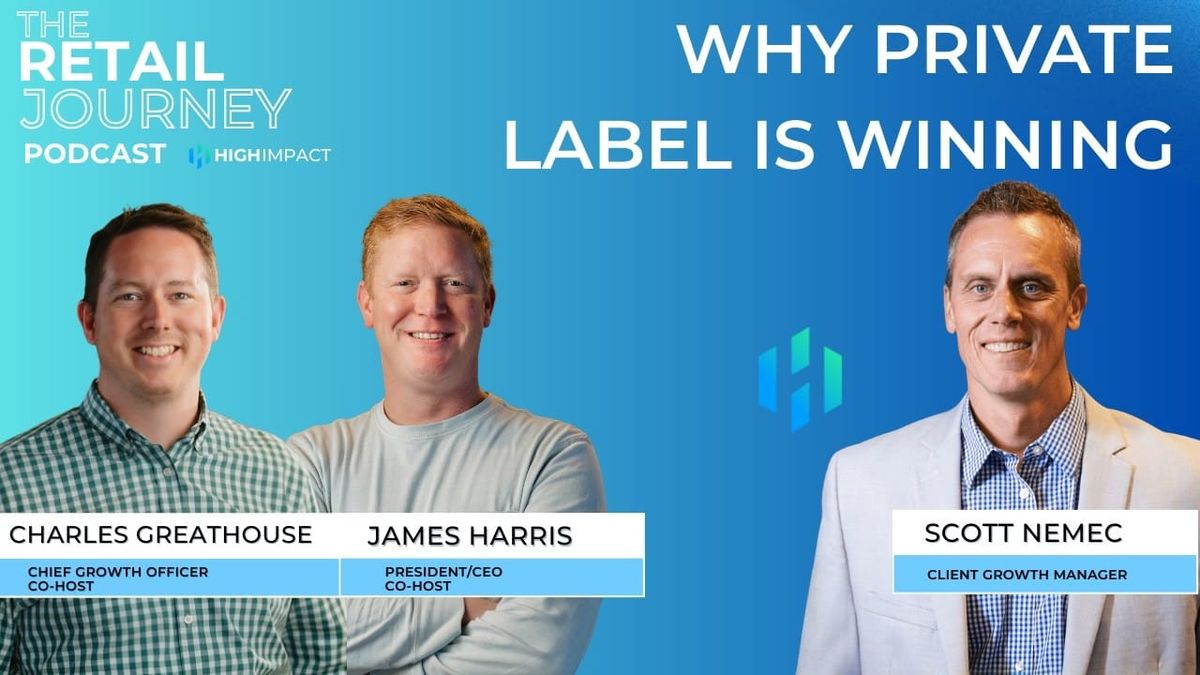
A lot of people say they understand Walmart and Sam’s Club. Scott Nemec has lived the food side for decades, then walked into the agency world and realized how much more there is to learn. We talk about that career shift, why “broker” earned a bad reputation, and what it takes to reshape the narrative with real capability across analytics, item management, replenishment, and customer-ready selling.
We also dig into the biggest force reshaping shelves right now: private label and premium private brand growth. From Bettergoods to broader private brand tiering across retail, we break down why good product matters, how trust gets built one great experience at a time, and why packaging and a sharp reason-to-buy often decide whether a product wins or quietly disappears. Scott shares how strong partners stay proactive, track food trends, place smart bets, and avoid the trap of “me too” innovation that only sounds differentiated inside the building.
Then we zoom out to the shopper reality: inflation pressure, the emotional bond people have with favorite foods, and why snacking keeps expanding even when budgets are tight and meal routines are changing. If you’re a founder or brand leader aiming for Bentonville, we offer practical advice on timing, persistence, getting honest feedback, and building a story that earns a yes. Subscribe for more real-world retail strategy, share this with a teammate, and leave a review with the one private brand item you think is truly best-in-class.
More About this Episode
The Strategic Pivot: Navigating the Modern CPG Landscape
The transition from a multi-billion dollar corporate environment to the high-stakes world of retail agencies reveals a fundamental truth about the Consumer Packaged Goods (CPG) industry: what got us here won't get us there. Having spent two decades within the traditional structures of a meat and food giant like Hormel, I recently made the leap into the agency space at High Impact. This shift has provided a fresh vantage point on how the "triangle sale” the relationship between the retailer, the supplier, and the solution provider is evolving in an era of rapid inflation and private brand dominance.
For years, the term "broker" carried a certain stigma in the corporate world, often viewed as a necessary but uninspired middleman. However, the reality of the modern retail landscape, particularly within the Walmart and Sam’s Club ecosystem, demands a level of specialized expertise that even the most seasoned corporate veterans might lack. Moving from a world of "advisorships" to a collaborative agency environment was a humbling reminder that mastering the universe of food is an ongoing process. The complexity of today’s market requires more than just sales volume; it requires a deep integration of analytics, replenishment strategy, and a proactive approach to category growth.
The Rise of the Private Brand Powerhouse
One of the most significant shifts we are witnessing in 2026 is the aggressive evolution of private brands. We have moved far beyond the days when a store brand was simply an Opening Price Point (OPP) "prize fighter" designed to be the cheapest thing on the shelf. Today, retailers are using private labels to lead in innovation and quality.
Walmart’s introduction of Better Goods is a prime example of this "tiering" strategy. By focusing on three distinct pillar plant-based, "better-for-you," and culinary creations. They are not just offering a cheaper alternative; they are offering a superior product. When a private brand can win over a consumer with a premium pizza or a specialty snack at a lower price point than the national brand, it builds a reservoir of trust that extends across the entire store.
This trend is not isolated to one retailer. Whether it is Target’s Good & Gather or Kroger’s Private Selection, the goal is the same: elevating the store brand to a position of prestige. For national brands, this means the competitive landscape has fundamentally changed. You are no longer just competing with the guy next to you on the shelf; you are competing with the retailer themselves.
Proactive Leadership in Food Innovation
To thrive in this environment, suppliers must move from a reactive "tell us what to do" mindset to a proactive leadership stance. The best partners, the Pepsicos and General Mills of the world, succeed because they are constantly looking ahead. They use Limited Time Offerings (LTOs) to test flavors and maintain freshness in the set, rolling successful experiments into their everyday offerings.
However, you do not need a multi-billion dollar balance sheet to lead. Leading from the pack requires a different kind of agility. It involves:
- Monitoring Food Service Trends: True CPG innovation often starts at the restaurant level. By tracking flavor profiles in food service, brands can anticipate what will eventually migrate to the grocery aisle.
- Identifying Genuine Differentiation: The "Me Too" strategy is a recipe for failure. Adding flax to oatmeal or a slightly different protein count to yogurt is not enough. If the consumer cannot immediately see the "why" on the packaging, the product will languish.
- Understanding the Emotional Connection: Inflation has made the consumer's relationship with food more complex. While they are looking for value, they still want the "dignity of the meal." They want products that allow them to create memories without breaking the bank.
Resilience and the Reality of Retail
The journey of an emerging brand is rarely a straight line. Many founders surround themselves with supportive voices, but in the retail world, a "real friend" is the one who tells you the hard truth about your product. Persistence is an endurance sport. I have seen incredible products fail because the packaging failed to communicate the value proposition to a distracted shopper.
In the current economic climate, where wages are struggling to keep pace with cumulative inflation, consumers are making trade-offs. We are seeing a proliferation of snacking at the expense of traditional meal times. Brands that fail to adapt to these "single-serve" or "convenient-carry" lifestyles risk losing their audience entirely. Even legacy billion-dollar "cash cows" can lose 30 share points in a blink if they take their eye off the ball while smaller, more agile brands like Annie's move in to solve a consumer need for "better-for-you" options.
Lessons from the Front Lines
Reflecting on my first six months in this new role, the biggest takeaway is the value of broad exposure. While I spent 20 years specializing in food, navigating the complexities of cold chains, code dates, and food safety. The cross-pollination of ideas from apparel, home, and OTC (Over-the-Counter) categories is invaluable. The shopper who buys the premium private label steak is the same shopper buying Mainstays bedding for their kids. They are shopping the whole store, and as suppliers, we must understand that entire journey.
The retail world is unforgiving of mistakes. A single Excel formula error can lead to a five-figure accrual nightmare, but those blunders are often the catalysts for better systems and sharper strategies. As we look toward the remainder of 2026, the focus must remain on finding those brands that have "hustled at the street level" and are poised for a springboard.
Ultimately, success in retail is about identifying where the puck is going. Whether you are an established giant or an emerging founder, the objective is the same: find the white space, prove the story, and have the humility to adapt when the market shifts. The journey is long, but for those willing to embrace the friction and the hard truths, the opportunity for growth has never been greater.